
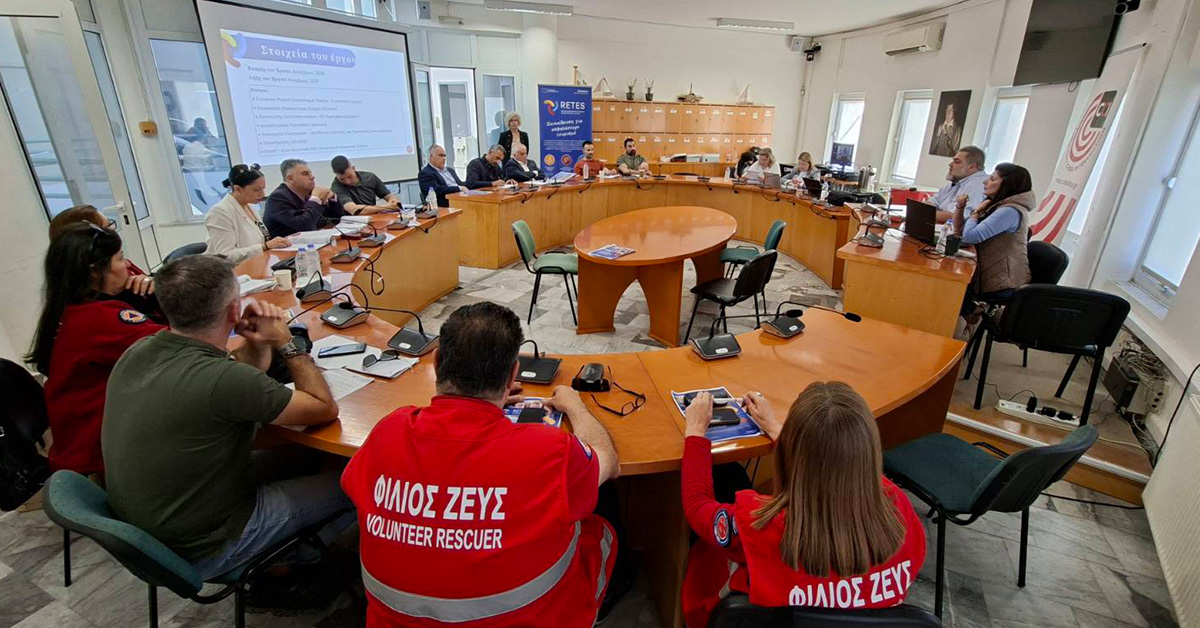
A local focus group held in Malevizi, Crete, brought together tourism organisations, civil protection bodies and vocational training providers to discuss how destinations can better prepare for climate-related risks.
As part of the RETES project, a local workshop was held at Malevizi Town Hall on 29 April 2026, bringing together 20 participants representing tourism organisations, civil protection bodies and vocational training providers.
The session was organised within the framework of RETES – Resilience Enhancement in Tourism through Education and Skills – a project funded by the Erasmus+ programme that aims to strengthen disaster prevention, preparedness and emergency management skills in the tourism sector. The workshop formed part of the project’s local activities in the Malevizi pilot area, where partners are analysing how tourism stakeholders and civil protection actors cooperate in the face of climate-related hazards.
The discussion focused on a key question for many tourism destinations: how can tourism and civil protection work together more effectively to prevent and manage risks that may affect visitors, businesses, infrastructure and local communities?
During the workshop, participants shared their experiences and identified existing cooperation practices in the area. One of the main conclusions was that collaboration already exists in some cases, particularly between hotels and the Fire Department. However, this cooperation is not yet systematic, and regular preparedness exercises remain limited.
Participants also highlighted that tourism businesses are often not fully included in civil protection planning. This creates a gap between emergency management structures and the realities of the tourism sector, especially in destinations where visitor flows, accommodation facilities and seasonal activity can significantly influence emergency response needs.
The workshop underlined the importance of improving communication channels, strengthening networking and developing joint action plans between tourism stakeholders, municipalities, regional authorities and civil protection services. Participants agreed that cooperation should not only take place during emergencies, but should also be built through prevention, training and regular coordination.
Several practical ideas were discussed during the session. These included the creation of local cooperation committees, the organisation of more frequent coordination meetings, and the implementation of field exercises and preparedness drills involving both tourism and civil protection actors. Participants also stressed the need for more practical training tailored to the tourism sector, so that businesses and staff can better understand their role before, during and after emergency situations.
The role of municipalities and regional authorities was identified as especially important. Local and regional institutions can help coordinate the different actors involved, promote shared procedures and ensure that tourism businesses are better integrated into local risk management and preparedness strategies.
The workshop showed that stronger cooperation between tourism and civil protection can contribute to safer destinations, better prepared businesses and a more active local community. It also confirmed the relevance of the RETES approach, which focuses on connecting stakeholders, identifying training needs and developing tools that support resilience in tourism destinations.
The results of the Malevizi workshop will contribute to the next phases of the RETES project, including the development of training materials and cooperation models that can be adapted to different European tourism contexts.