
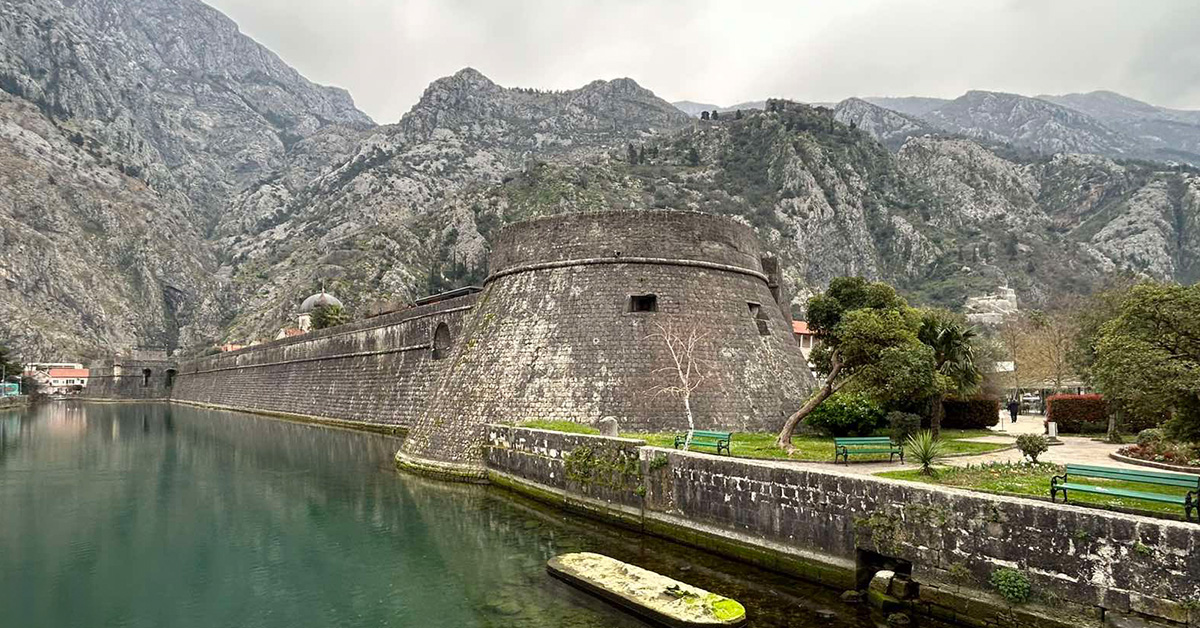
The RETES project continues its journey through the five pilot areas with Kotor Municipality, in Montenegro, a unique destination where tourism, maritime activity and risk management are closely connected.
As part of the RETES project, partners are carrying out local mapping activities in five European pilot areas to analyse how tourism stakeholders and civil protection actors cooperate in the prevention and management of risks that may affect tourism destinations.
This week, the focus is on Kotor Municipality, in Montenegro. The mapping activities in this pilot area are being carried out with the involvement of the Ministry of Interior of Montenegro – Rescue and Protection Directorate, a key partner in the RETES consortium and an important actor in the country’s emergency management and civil protection system.
Kotor is located in the spectacular Bay of Kotor, one of the most distinctive landscapes on the Adriatic coast. The area is internationally recognised for its outstanding natural and cultural value and includes historic coastal towns such as Kotor, Perast, Risan and Prčanj. These settlements attract visitors interested in maritime heritage, historic architecture, coastal landscapes and cultural tourism.
Tourism is a central component of the local economy. In particular, the historic town of Kotor receives significant visitor flows linked to cruise tourism, which plays a major role in the area’s tourism profile. Cruise ship arrivals can concentrate a large number of visitors in a short period of time, especially in and around the old town, creating specific challenges related to mobility, crowd management, visitor safety and emergency response capacity.
At the same time, the wider bay area combines coastal settlements, mountainous terrain and maritime routes, making risk management a complex issue that involves different sectors and levels of responsibility. The territory may be exposed to several hazards, including earthquakes, landslides, flooding, wildfires and maritime accidents. These risks can affect residents, visitors, cultural heritage sites, tourism infrastructure, transport routes and coastal activities.
Within this context, RETES is analysing how different actors involved in tourism and emergency management coordinate their roles. The mapping activities focus on tourism authorities, maritime operators, local stakeholders and the national rescue and protection system, with the aim of understanding existing cooperation mechanisms and identifying possible needs for improvement.
The work carried out in Kotor is particularly relevant for RETES because it allows the project to explore the relationship between tourism resilience and civil protection in a destination with high international visibility and complex territorial dynamics. The presence of cruise tourism, historic urban areas and coastal-maritime risks provides valuable insights into how tourism destinations can strengthen preparedness and improve coordination in emergency situations.
The information collected in this pilot area will contribute to the development of future RETES training resources, cooperation tools and project activities. By identifying local needs and analysing how stakeholders currently interact, the project aims to support more resilient tourism destinations and promote stronger links between tourism professionals, vocational education and training providers and civil protection actors.
Kotor’s experience will also enrich the European perspective of the RETES project, enabling partners to compare different territorial contexts and share practices that may be useful for other tourism destinations facing similar challenges.
Follow RETES as we continue our journey through the project pilot areas.